Every Roof. For Every Child.
When the grid goes down, the lights stay on.
Russia is striking Ukraine's power system in the middle of winter. We put solar panels and batteries on the roofs that have to keep working: hospitals, schools and orphanages, and just as much the ordinary apartment blocks where families live. Every child, not only the ones who happen to live near an institution.
It comes down to surprisingly little.
A child does not need much electricity to eat a hot meal, do homework, wash and stay in touch. The problem is that right now there is none at all.
Six in the afternoon, somewhere in Kharkiv
It is dark by four. The heating is off because the pump in the basement has no power, so the flat is nine degrees. Homework is due tomorrow and the phone is at eleven percent.
One lamp is 25 watts. Six hours of it costs 55 kilowatt hours over an entire year. That is the whole difference between a child who keeps up with school and one who quietly falls behind, and it is a rounding error on a rooftop.
This is the part we can fix first, and it is why the list in the calculator starts where it does.
Illustration. We publish photographs only with the consent of the families and institutions involved.
| What | Power | Per day | Per year | Why it matters |
|---|---|---|---|---|
| A simple hot meal | 300 W | 1 h | 110 kWh | A pot of pasta on a small plate, not a full kitchen |
| Light for homework | 25 W | 6 h | 55 kWh | It is dark by four in the afternoon |
| Water pump | 600 W | 30 min | 110 kWh | Water in the tap and a toilet that flushes |
| Hot water to wash | 2 kW | 15 min | 182 kWh | A quick wash, which stops being routine at −20 °C |
| Tablet and phone | 15 W | 4 h | 22 kWh | School when it is remote, and contact with family |
| Internet | 10 W | all day | 88 kWh | Lessons, air raid alerts, a way to call for help |
| Heat pump | 2 kW | 10 min | 122 kWh | Takes the edge off the cold in one room |
Everything on that list comes to about 690 kWh a year for one child, which is €70 a month.
These are wartime numbers, not peacetime ones. Cooking is one pot on a small hotplate rather than a full kitchen, and washing is a quick wash rather than a long shower. Counted that way the whole list is 690 kWh a year instead of the 1 200 it would be in an ordinary Swedish home, and that difference is the point: people are already going without, and a modest amount of electricity restores a great deal.
Heating with electricity remains the expensive end, which is why we count on ten minutes a day rather than pretending a donation can heat a flat around the clock. We would rather show a small honest number than a large invented one.
The quiet hero on the list is the pump. In many Ukrainian buildings the heating system itself is intact, but it needs electricity to push hot water through the radiators and to lift cold water to the ninth floor. Without power the building goes cold and the taps run dry even though nothing is broken.
The war moved into the heating system.
The UN Human Rights Monitoring Mission in Ukraine describes the winter of 2025 to 2026 as the coldest since 2010. Through the same winter there were near daily attacks on the energy system, including five large-scale assaults that hit several regions at once.
What changed is the target. It used to be large power plants and the biggest substations. Now it is combined heat and power plants inside cities, boiler houses in residential districts, and substations out in the distribution grid. Nearly 60 percent of verified strikes between October 2025 and April hit smaller stations, against 31 percent the winter before.
Taking out a small substation takes less. The people left without are just as cold.
The result was rolling blackouts across the country, and in the worst periods households had electricity for only a couple of hours a day. Heating and hot water disappeared for weeks for hundreds of thousands of people while the temperature sat below twenty degrees of frost.
Sun on the roof. Power in the basement.
Two parts that together make a building independent of whether the grid is standing.
The panels produce
Ukraine gets 1 100 to 1 250 kWh per installed kilowatt per year, on a par with Italy outside Sicily. Even the weakest regions sit just below Germany's best. The sun is there. It only needs roofs.
The battery holds it
The sun is not shining when the power is needed most, on a dark winter evening. The battery moves the day's production into the night, and takes over the second the grid disappears. Without one, everything goes dark when the outage comes, even on a sunny day.
Why many roofs instead of one big plant
A large power plant is a single address. It can be hit, and when it is, a whole region goes dark. A thousand roofs are a thousand addresses, and no missile runs out of them.
It is also why the attacks moved down into the distribution grid. Once the big installations are defended, the small stations become the target. A building that makes its own electricity and stores it cares much less which station is down.
And it takes pressure off the whole system. Every building that carries itself is one that is not drawing from a grid already stretched to breaking, which leaves room for those with nothing of their own.
Three jobs, not one.
People think of a battery as a backup. It is, but that is the least of what it does. On a strained grid a battery is also a tool the whole system can lean on.
Day into night
The sun is strongest at noon and gone by four. The battery takes the middle of the day and hands it back in the evening, which is exactly when a family needs light, a hot meal and a working pump.
Through the blackout
When the grid drops, the battery takes over in under a second. It also charges from the grid whenever the grid is healthy, so a building goes into the evening full even after a week of cloud.
Holding the grid steady
Thousands of batteries that can charge when there is surplus and hold back when there is not are exactly the flexibility a damaged grid needs. Each building helps itself first, and the system second.
Sized for a building, not a cabin
The reference hospital installations carry about 0.46 kWh of storage for every kilowatt of solar. That works for a clinic that mostly runs in daylight.
An apartment block is different. It has to get through a winter night, twelve to sixteen hours, with pumps running and families home. So we size storage at roughly one kilowatt hour per kilowatt of panels, which is what the calculator shows.
Batteries are also where buying well matters most. We purchase panels and storage at installer prices rather than retail, and every krona saved becomes another roof rather than a bigger margin.
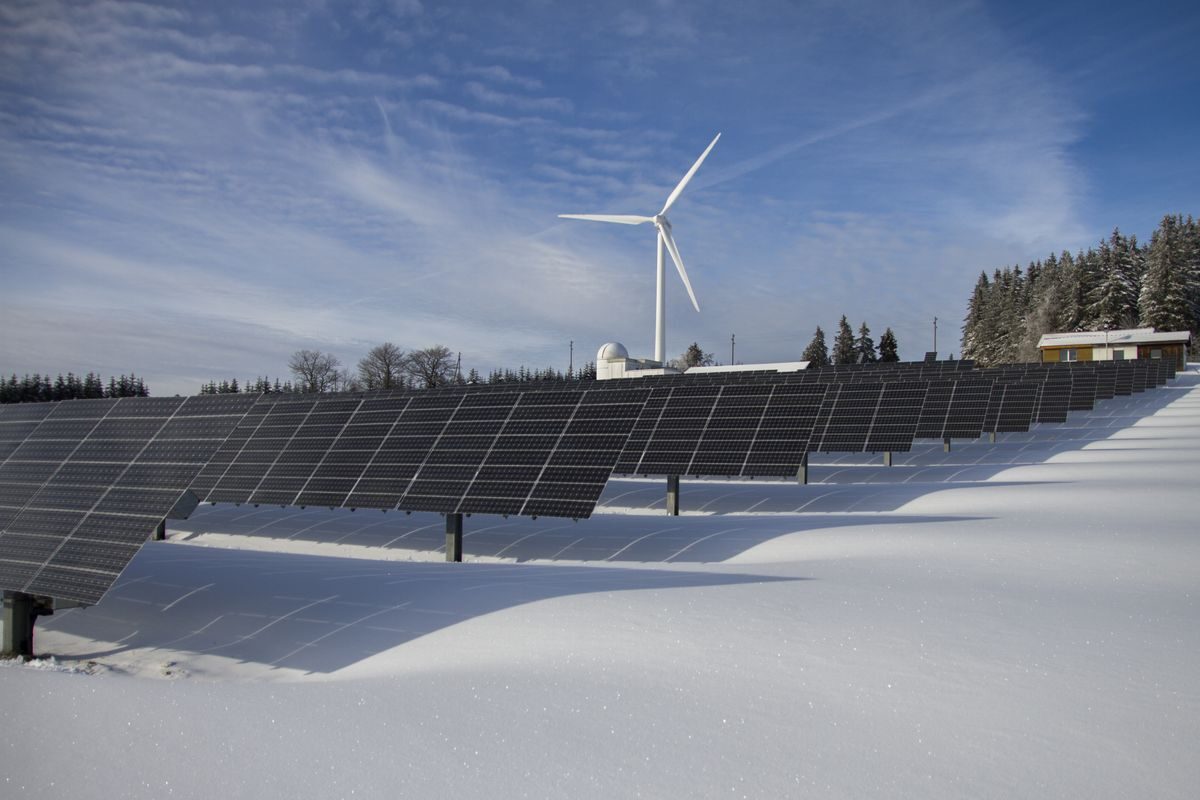
Solar works in the cold. Panels are more efficient at low temperatures; what they need is daylight, not heat.
Roofs that cannot go dark.
We prioritise buildings where an outage costs health or life, and where nobody else is standing ready to pay.
Homes and apartment blocks
Where most children actually live. Stairwells, lifts, water pumps and heating. On the ninth floor without power there is neither water nor warmth.
Hospitals and clinics
Surgery, oxygen, the cold chain for medicine, and equipment that cannot stop. Completed installations in Ukraine run from 12 to 450 kW per hospital.
Orphanages
Children with nowhere else to go when it gets cold. Heat, hot water and light around the clock.
Clinics for children with disabilities
Where equipment breathes, feeds or monitors. Here an outage is not inconvenient, it is life threatening.
Schools
Often the only heated room in a neighbourhood, and the place that becomes a warming shelter when everything else is cold.
Unused roofs and ground
Surfaces standing empty become production. Electricity does not have to come from far away to be worth something.
Built in Ukraine, by Ukrainians.
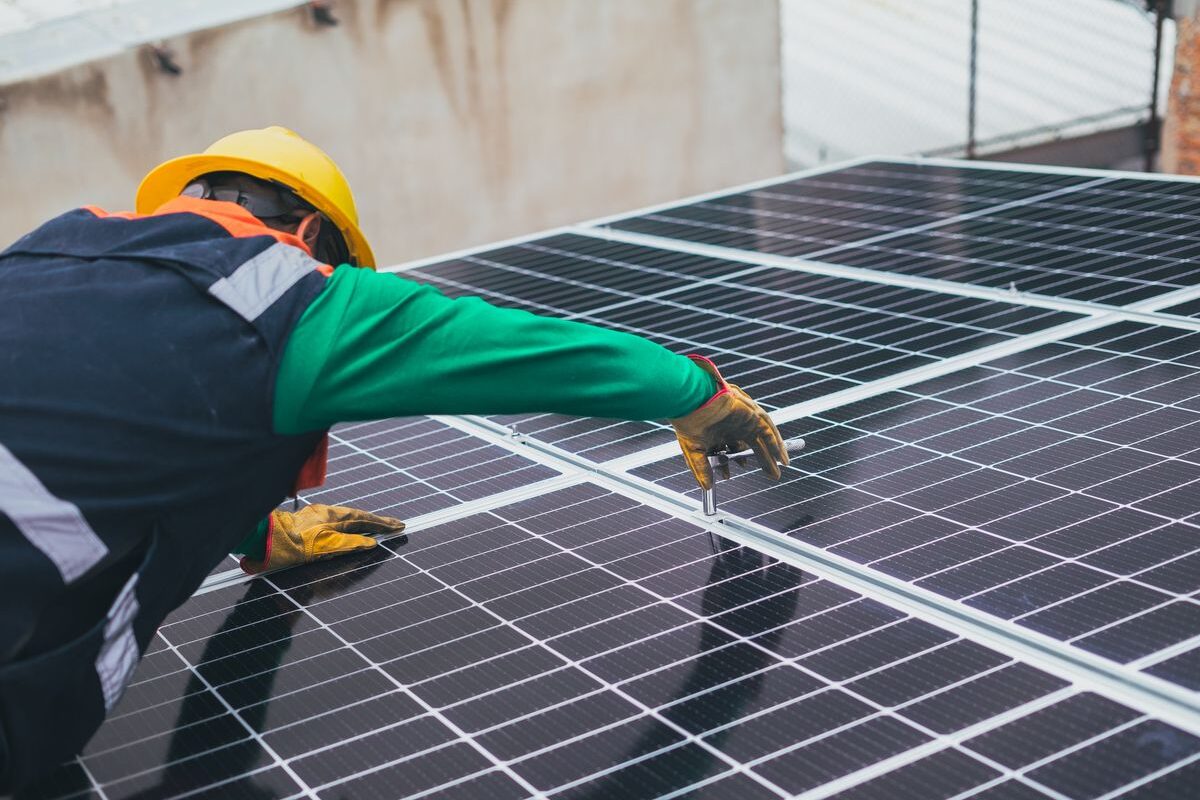
The installations are built by Ukrainian fitters. That means wages for electricians and engineers, orders for local wholesalers and subcontractors, and skills that stay in the country when the war ends.
Ukraine also makes its own panels. The country's first industrial solar module factory opened in Vinnytsia in 2019, with capacity for up to 400 MW a year. Every kilowatt produced at home is one that does not have to be imported, or paid for with imported fuel. That is energy independence in the most literal sense: harder to cut off, and harder to use as leverage.
The country that rebuilt itself fossil free while under fire.
Seven countries already run on almost entirely renewable electricity, among them Iceland, Paraguay and Albania. But none of them chose it. They inherited it from geography, through big hydro or geothermal that happened to be there.
Ukraine has a different opening, one nobody asked for. The grid has to be rebuilt regardless. The only question is what it is rebuilt into.
Ukraine can become the first country to deliberately build itself fossil free, from a shattered grid, under active attack, and distributed across thousands of roofs rather than a handful of large plants.
A country that rebuilds with generation spread across thousands of roofs ends up with a system that is harder to knock out, cheaper to run and cleaner than the one it replaced. Resilience and climate point the same way for once.
Every roof we build now is part of that grid. It is why we do not put it all in one place.
What we promise, and what we do not
We publish every installation: where it is, how big it is, what it cost and when it was switched on. The cost figures on this page come from three completed hospital installations in Ukraine, not from our own estimates.
We do not promise that a particular gift saves a particular child. Nobody can know that, and anyone who claims it is selling a feeling instead of a result. What we can promise is that the money becomes electricity on a roof that would otherwise be dark, and that you get to see which roof.
The production and cost numbers are real but vary with region, roof orientation and prices at the time of purchase. We update them when reality changes.